
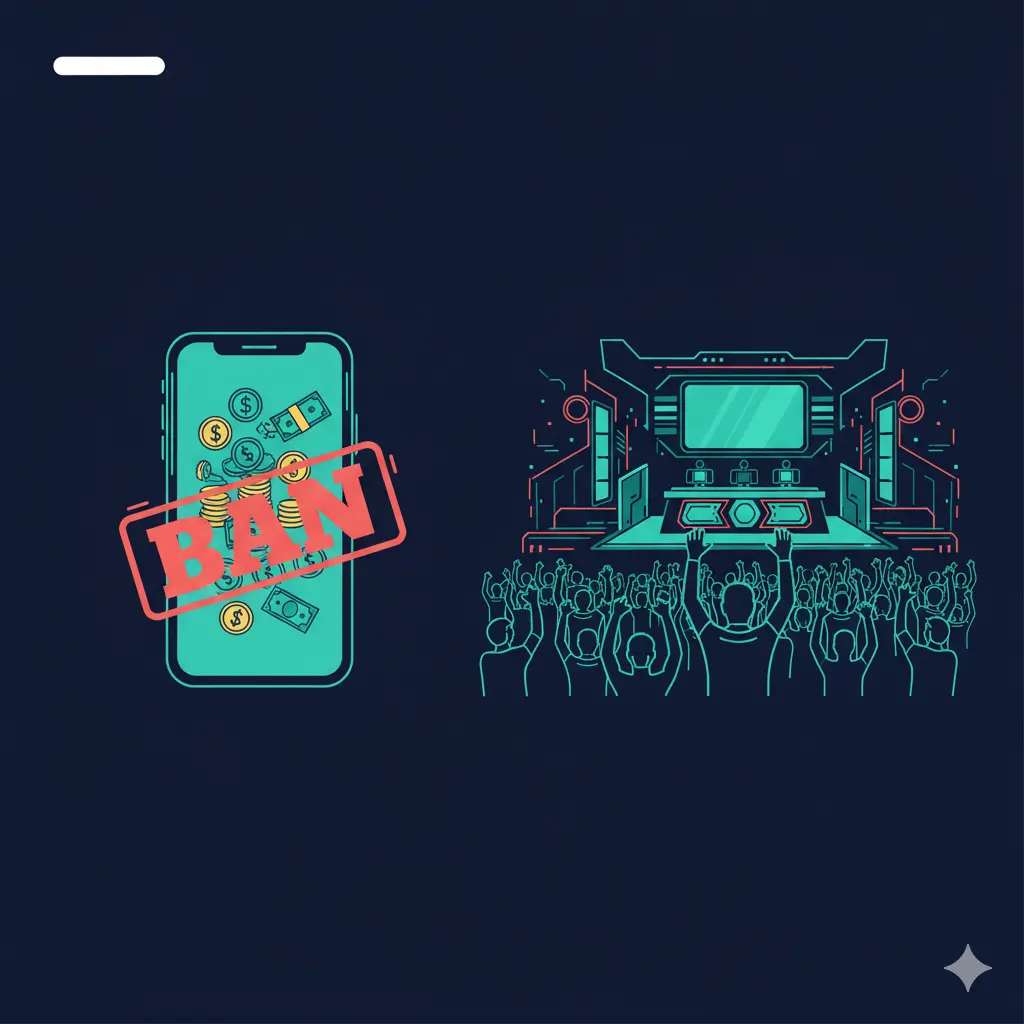
India’s Promotion and Regulation of Online Gaming Act, 2025 has now come into effect, banning real-money “money games” across the country. The government says the goal is to curb gambling-style harm and financial loss while steering the sector toward esports and non-monetary social gaming.
What counts as a “money game”?
- Any online game where real money is staked (entry fees, deposits, top-ups) with payouts dependent on outcomes—whether the outcome is chance or skill.
- This captures fantasy sports, real-money rummy/poker, casino-style apps, and many pay-to-enter tournaments. Platforms facilitating such play are now prohibited nationwide (with strict penalties for violations).
Why the law, and why now?
Authorities have cited social harms, debt-linked incidents, and the explosion of unregulated “instant win” and real-money apps. At the same time, policymakers want India to be a game-development hub, so the law tries to separate harmful real-money mechanics from skill training, esports, and game creation.
What’s still okay (and what isn’t)
Allowed (broadly):
- Esports (non-monetary)—ranked/ladder matches, school/college leagues, LAN events, and online tournaments without real-money stakes.
- Casual/social gaming with cosmetics or season passes that don’t affect outcomes.
Not allowed:
- Apps where users stake real money for outcome-based rewards (chance or skill).
- Influencers/celebrities promoting banned formats may also face action under the law’s liability provisions.
What this means if you’re a player
- Wallets & balances: Expect withdrawals, refunds, or conversion policies from affected apps. If a platform delays, check its help center and keep screenshots of balances/transactions.
- Age gates & KYC: Even non-monetary platforms may tighten KYC and age verification to prove compliance.
- Esports shift: Look for more free-to-enter ladders/leagues, school/college circuits, and brand-sponsored tournaments.
What this means for parents
- Simpler boundaries: It’s now much clearer what’s off-limits (any real-money outcome-based play).
- Watch for covert monetization: Some apps may pivot to loot boxes or pseudo-currency. Keep an eye on in-app purchases and set device-level spending limits.
- Esports ≠ gambling: Competitive gaming without stakes is being explicitly encouraged—schools and clubs may add legitimate circuits.
What platforms will likely do next
- Pivot to esports & creator tools: Expect bracket systems, coaching, VOD tools, and UGC arenas instead of cash tables.
- Monetize via ads & cosmetics: Battle passes, skins, and non-pay-to-win cosmetics will replace cash prize pools.
- Compliance messaging: Clear “no money games” badges, age-rating, and KYC flows to reassure regulators and payment partners.
Industry outlook
Short term, the ban hits GMV and sponsorships for real-money apps. But mid-term, we’re likely to see a more brand-safe gaming ecosystem around esports, streaming, and IP licensing. Several reports note the government’s stated intent to recognize esports while drawing a bright red line around gambling-like mechanics.
FAQ (quick)
Q: Are fantasy sports banned?
If they require real-money stakes with outcome-based prizes—yes. Formats without entry fees or with non-monetary rewards fall on the safer side.
Q: Can influencers still promote “money games”?
The law and allied advertising rules point to penalties for promoting banned formats; expect tighter platform policies.
Q: Is this permanent?
The Act is in force; future tweaks would come via amendments or rules/notifications. For now, platforms must comply.
Bottom line
A clear nationwide ban on real-money online games is here. If you’re a player, stick to esports and non-monetaryformats. If you’re a platform or creator, pivot to skill, community, and content—that’s where India’s new gaming future is headed.