
Introduction: A result that echoes beyond one trophy
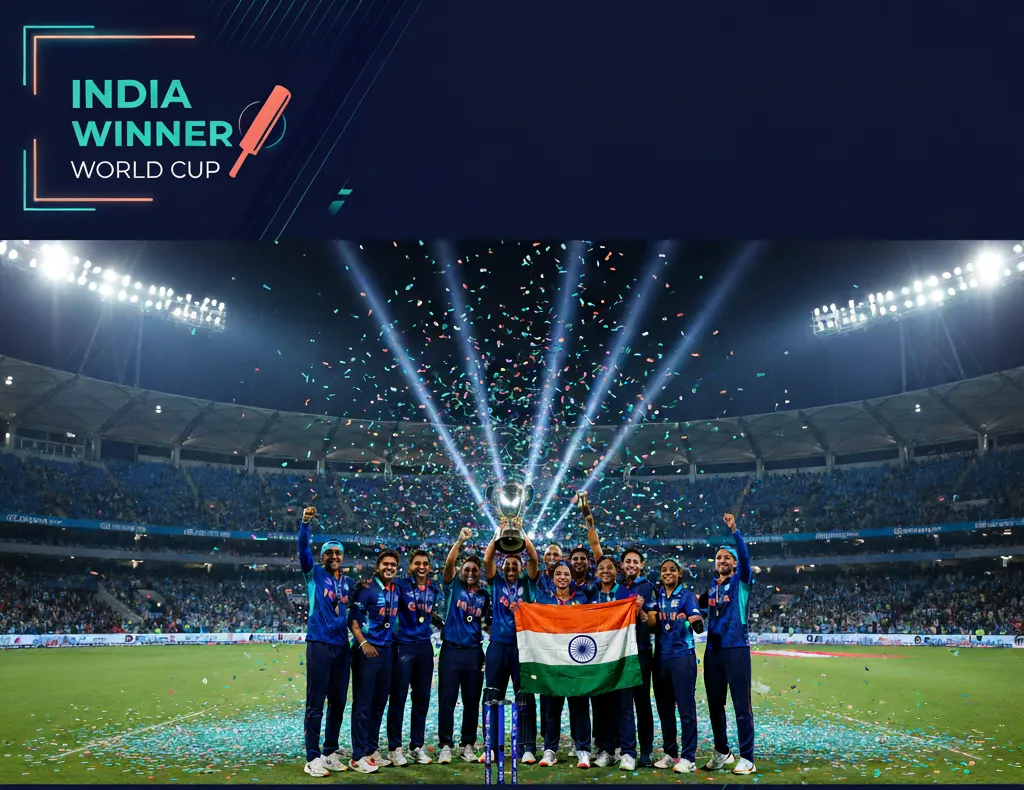
On November 2, in Navi Mumbai’s roaring DY Patil Stadium, India’s women rewrote history with a 52-run win over South Africa to clinch their maiden Women’s Cricket World Cup. The scoreline tells only part of it. The real story is how a nervy tournament turned into redemption, leadership, and belief — and how that momentum can ripple across the next decade of women’s sport in India.
The anatomy of a champion’s night
India batted with intent, stacking a competitive total thanks to Shafali Verma’s rapid 87 and Deepti Sharma’s stabilizing 50-plus. When it was time to defend, Sharma owned the middle overs with a five-wicket haul, while Shafali chipped in with two crucial wickets — a rare and priceless all-round night. South Africa’s captain Laura Wolvaardtresisted brilliantly with a century, but India’s composure sealed it as the visitors were bowled out chasing. Shafali took Player of the Match; Deepti’s all-tournament consistency earned Player of the Tournament honors.
Why this moment matters (the “1983” analogy)
For decades, women’s cricket in India has hovered between promise and patience. This title can be the cultural inflection point — akin to 1983 for the men — that changes pipelines, budgets, and public imagination. Senior voices and media have already framed it that way, and national leaders publicly saluted the team. The cricket board announced multi-crore rewards, underlining institutional buy-in.
Four pillars that could shift next
1) Pathways and participation
Grassroots cricket benefits when heroes lift silverware. Expect a surge in girls’ registrations, more school tournaments, and state associations lobbying for dedicated under-14/under-16 calendars. If India wants to turn one trophy into a dynasty, widening the base (especially in Tier-2/3 cities) is non-negotiable.
2) Domestic structure and workload
India’s women have a solid domestic scene, and the WPL has become a vital accelerator — but now is the time to deepen match volume and competition quality. Adding A tours, more red-ball exposure, and aligned strength-and-conditioning programs can keep the best players fresh without burnout. A multi-format mindset (ODI + T20 + Tests) will prevent typecasting and broaden skill sets.
3) Coaching and analytics
The final showcased clear role clarity — powerplay aggression, spin choke in the middle, and sharp boundary protection. To scale this, teams need centralized analytics, bowling workloads monitored through season-long dashboards, and scenario training (e.g., death-over defense with wet balls, or chase stabilization after early wickets).
4) Commercial muscle and media
Nothing opens boardroom doors like a world title. India’s win will tempt non-endemic sponsors (fintech, beauty, edtech) to commit multi-year deals. Broadcasters have proof that primetime women’s cricket delivers ratings; expect better slots, surround programming, and bigger city festivals around marquee series. This creates a feedback loop — money funds pathways; pathways produce winners; winners drive fandom.
The players who defined the run
- Harmanpreet Kaur (C): Tactical calm matters in finals. Her field and bowling changes maximized India’s control once the ball softened.
- Shafali Verma: Drafted to fill an injury void, she was fearless with bat and ball — a modern white-ball prototype who can flip games in five overs.
- Deepti Sharma: Tournament metronome. Her 22 wickets and 200+ runs speak to craft and temperament under pressure.
- Smriti Mandhana: The anchor and aura at the top; her presence calms chases and sets tempo when batting first.
- Bowling unit: The unsung story — discipline at the death and smart use of match-ups against SA’s middle order.
South Africa’s role in a classic
Wolvaardt’s hundred and South Africa’s fight made this a final for the ages. Great finals need two good teams; SA’s campaign lifted the floor of global competition and sharpened India’s edge when it mattered.
What the data says about momentum
India’s tournament arc — early stumbles, epic semi vs Australia, composed final — is a masterclass in peaking late. It shows the value of bench contributions and role flexibility. As more tracking becomes public, expect analysts to highlight India’s powerplay boundary percentages, dot-ball control in overs 25–40, and catching efficiency upticks.
Five concrete recommendations for Indian cricket
- Year-round contracts for a deeper pool (40–50 players), indexed to fitness and skill progress markers.
- Specialist camps — left-arm seamers, power-hitting, fielding under lights with dew.
- Science of recovery — women-specific S&C and nutrition programs, periodization around WPL/ICC events.
- Coach pathway — mentorships for women coaches and analysts to lead state and A-team programs.
- Marketing & access — family-friendly scheduling, discounted school blocks, city fan-parks for big games.
Conclusion: From one night to a new normal
Winning a World Cup changes how a country feels about a team — and how a team feels about itself. If India turns this moment into a plan — deeper pathways, smarter scheduling, and bold commercial vision — the next generation will treat world titles as targets, not miracles. That’s how “1983 moments” become eras.