
Introduction
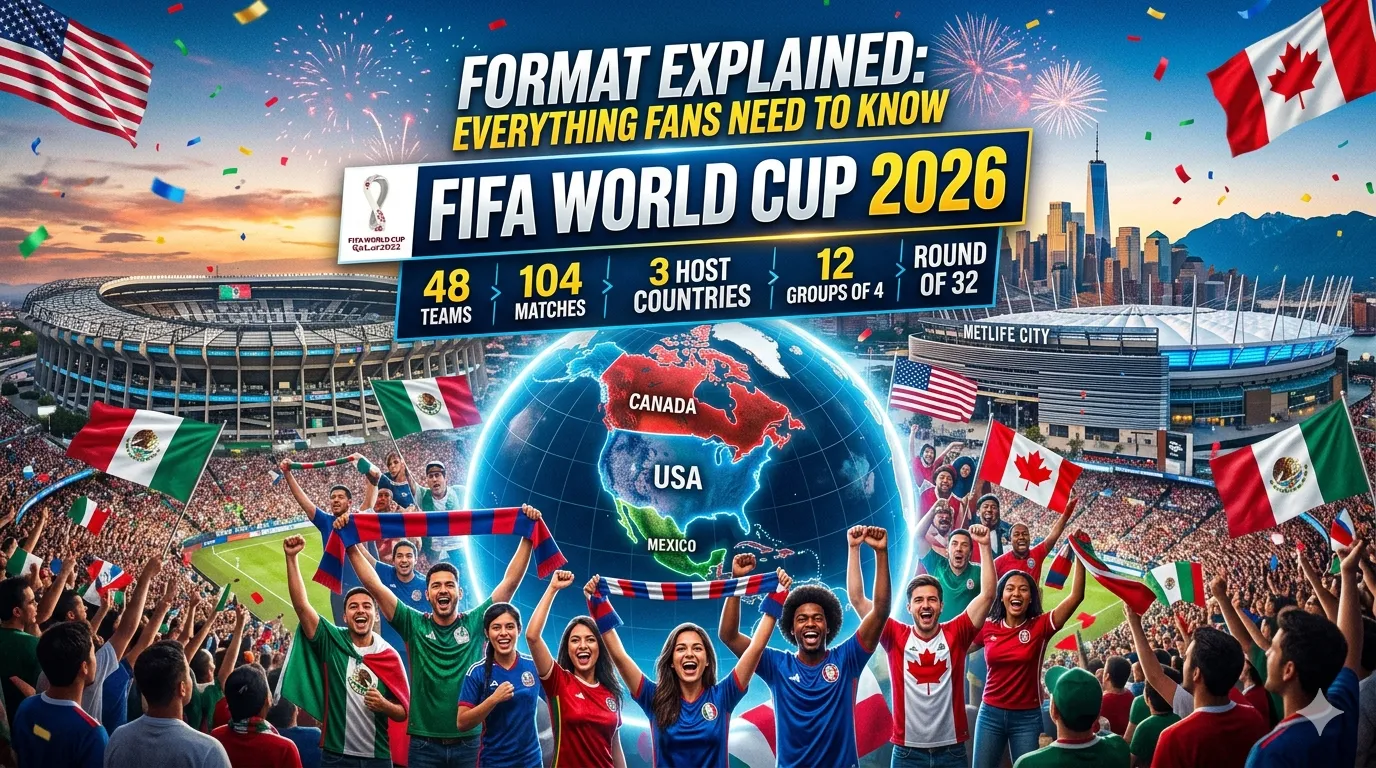
The FIFA World Cup 2026 is set to become the biggest football tournament in history. For the first time ever, 48 national teams will compete for football’s most prestigious trophy. Hosted jointly by the United States, Canada, and Mexico, the tournament introduces a completely new structure designed to increase global participation and create more exciting matches.
With more teams, more matches, and a brand-new knockout stage, many football fans are asking the same question: How exactly will the FIFA World Cup 2026 work?
This comprehensive guide explains everything you need to know about the tournament format, qualification process, group stage, knockout rounds, and what makes this World Cup different from previous editions.
Why FIFA Expanded the World Cup
Since 1998, the FIFA World Cup has featured 32 teams competing in eight groups. While the format produced many memorable moments, FIFA believed that several deserving nations were missing out on the world’s biggest football event.
The expansion to 48 teams aims to:
- Increase global representation
- Give more countries a realistic chance to qualify
- Grow football in developing nations
- Create additional high-profile international matches
- Increase fan engagement worldwide
The new format adds 16 extra teams while maintaining competitive integrity throughout the tournament.
FIFA World Cup 2026 at a Glance
Key Facts
- Host Nations: United States, Canada, Mexico
- Total Teams: 48
- Total Matches: 104
- Tournament Duration: Approximately 39 days
- Number of Groups: 12
- Teams Per Group: 4
- Knockout Teams: 32
- Final Venue: New York/New Jersey Stadium
The 2026 tournament will be the largest FIFA World Cup ever organized.
How the Group Stage Works
The first stage of the tournament consists of 12 groups labeled A through L.
Each group contains:
- 4 teams
- 6 total matches
- Round-robin format
Every team plays three group-stage matches.
Points System
Teams earn:
- 3 points for a win
- 1 point for a draw
- 0 points for a loss
Group standings are determined by:
- Total points
- Goal difference
- Goals scored
- Additional FIFA tiebreakers if necessary
Which Teams Advance?
This is where the new format becomes interesting.
From each of the 12 groups:
- Top 2 teams qualify automatically
- Total automatic qualifiers = 24 teams
In addition:
- The 8 best third-place teams across all groups also qualify
This creates a 32-team knockout stage.
Why Third Place Matters
In previous World Cups, finishing third usually meant elimination.
In 2026:
- Third-place teams can still advance
- Goal difference becomes extremely important
- Every match remains meaningful until the final group-stage fixture
This creates more excitement and reduces the chances of dead-rubber matches.
The New Round of 32
One of the biggest changes is the introduction of the Round of 32.
Previous Format:
- Group Stage
- Round of 16
- Quarterfinals
- Semifinals
- Final
New Format:
- Group Stage
- Round of 32
- Round of 16
- Quarterfinals
- Semifinals
- Final
The additional knockout round increases the number of high-stakes matches and gives fans more football to enjoy.
Knockout Stage Structure
After the group stage:
Round of 32
32 teams compete.
Round of 16
16 winners advance.
Quarterfinals
8 teams remain.
Semifinals
4 teams battle for a place in the final.
Third Place Match
Losing semifinalists compete.
Final
The last two teams fight for the FIFA World Cup trophy.
A team reaching the final will now play eight matches instead of seven.
What Are the Advantages of the New Format?
1. More Nations Represented
Countries from Africa, Asia, CONCACAF, and Oceania receive more qualification spots.
This means fans from more regions can experience World Cup football.
2. More Matches
The tournament expands from 64 matches to 104 matches.
This creates:
- More entertainment
- More rivalries
- More opportunities for underdogs
3. More Revenue for Football Development
Additional matches generate increased revenue, which FIFA says can be reinvested into global football development programs.
4. Greater Competitive Opportunities
Smaller football nations now have a realistic pathway to qualify and compete on the world stage.
Potential Criticisms
Not everyone supports the expansion.
Fixture Congestion
Players already face crowded club schedules.
Critics worry:
- Increased fatigue
- Greater injury risk
- Reduced recovery time
Longer Tournament
The World Cup will last longer than previous editions.
This could create challenges for domestic leagues and club competitions.
Competitive Balance
Some analysts fear weaker teams could produce less competitive matches during the early stages.
Despite these concerns, FIFA believes the benefits outweigh the drawbacks.
Host Nations: USA, Canada, and Mexico
The 2026 World Cup marks another historic first.
Three countries will jointly host the tournament:
United States
Hosts the majority of matches and the final.
Mexico
Becomes the first country to host matches in three separate World Cups.
Canada
Hosts World Cup matches for the first time.
The tri-nation approach allows FIFA to utilize world-class stadiums and infrastructure across North America.
Teams Most Likely to Benefit
Several emerging football nations could benefit from expansion.
Potential beneficiaries include:
- Uzbekistan
- Jordan
- Iraq
- Mali
- South Africa
- Jamaica
- Honduras
- New Zealand
The expanded format provides these countries with better qualification opportunities than ever before.
Will the New Format Improve the World Cup?
The answer depends on perspective.
Supporters believe:
- More nations deserve participation
- Global football will grow faster
- Fans will enjoy more matches
Critics argue:
- Quality could decline
- Tournament length may become excessive
- Elite competition could be diluted
Ultimately, the success of the format will be judged by fans, players, and the quality of football displayed during the tournament.
Final Thoughts
The FIFA World Cup 2026 represents the biggest transformation in modern World Cup history. With 48 teams, 104 matches, and a brand-new Round of 32, the tournament promises more drama, more stories, and more opportunities for nations around the world.
Whether you’re supporting a football powerhouse or a first-time qualifier, one thing is certain: the 2026 FIFA World Cup will be unlike any tournament football has ever seen.
As kickoff approaches, fans across the globe can look forward to the largest celebration of football the world has ever witnessed.